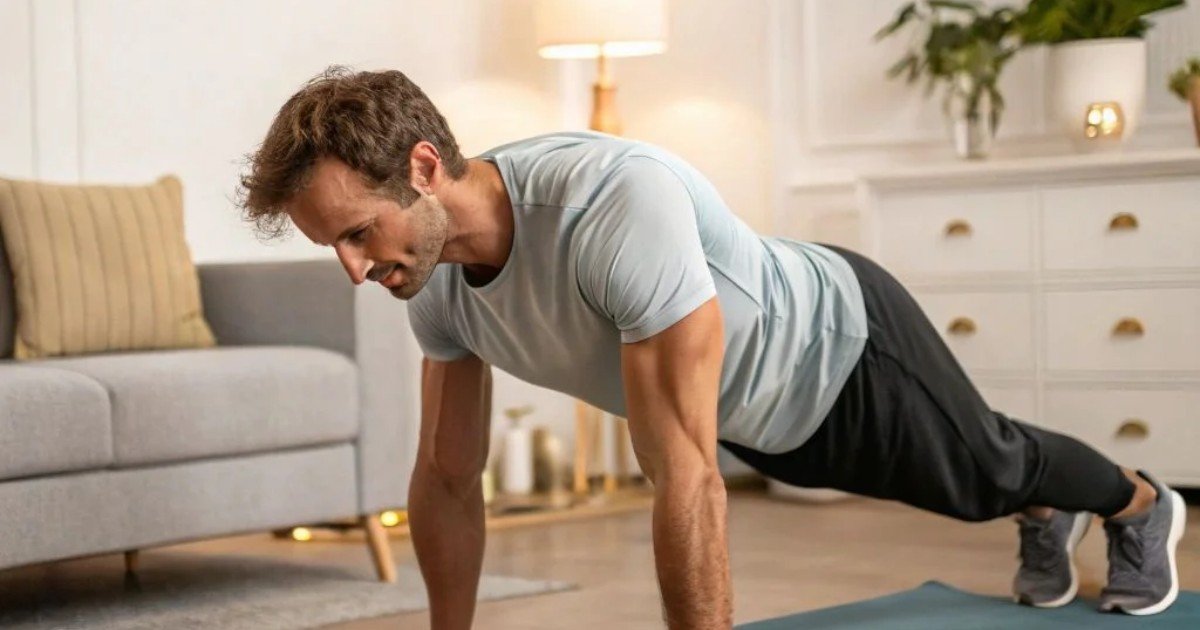
Finding the best lower ab moves is an effective way to strengthen your abdominal muscles, improve core stability, and build a balanced fitness routine. Lower abdominal exercises challenge your ability to control your pelvis, stabilize your spine, and coordinate fundamental movement patterns.
The best lower ab moves do not need to be complicated. Exercises such as reverse crunches, dead bugs, bent-knee leg raises, and controlled flutter kicks can help strengthen your entire core when performed with proper technique. Beginners can start with easier variations and gradually progress as their strength improves.
Your abdominal muscles work together as a unified system rather than operating as completely separate upper and lower sections. However, certain movements place greater emphasis on pelvic control, leg movement, and stabilizing the lower back. Choosing suitable exercises can help you develop better functional core strength.
It is also important to understand that lower abdominal exercises cannot selectively burn fat from the lower belly. Reducing overall body fat requires a sustainable approach combining physical activity, balanced nutrition, adequate sleep, and consistent daily habits.
In this guide, you will discover nine of the best lower ab moves, learn how to perform them correctly, understand common mistakes to avoid, and find practical workout routines for home or gym training.
Table of Contents
1. What Are Lower Ab Moves?
Lower ab moves are targeted exercises that challenge the abdominal muscles while emphasizing pelvic control, leg movement, or stabilization of the torso. They often involve lifting the legs, curling the pelvis toward the rib cage, or keeping the spine stable while your limbs move.
The rectus abdominis is the long muscle running along the front of your abdomen. It contributes to trunk flexion and helps stabilize the torso. The transverse abdominis and oblique muscles also contribute heavily to core stability and movement control.
Although people commonly refer to the upper and lower abs, the rectus abdominis is actually one continuous muscle sheet. Exercise selection influences how different portions of the muscle are emphasized, but it does not completely isolate the lower section in total isolation.
The best lower ab moves combine controlled movement speed, appropriate difficulty, and strict form instead of relying on momentum or excessive repetition counts.
2. 7 Key Benefits of Lower Abdominal Exercises
Adding the best lower ab moves to your workout routine offers several long-term health and athletic benefits:
- Improved Core Strength: Strong abdominal muscles stabilize your torso during heavy lifting and everyday functional activities.
- Better Movement Control: Core training enhances your ability to coordinate hip, pelvic, and trunk movements safely.
- Support for Athletic Performance: A stable core transfers energy efficiently during running, lifting, swimming, and competitive sports.
- Greater Exercise Variety: Lower ab exercises complement traditional planks, side planks, and rotational core movements.
- Progressive Strength Development: Most lower ab exercises can be easily modified for both complete beginners and advanced athletes.
- Improved Posture and Spinal Alignment: Strengthening the deep core supports the lower back and encourages neutral posture.
- Enhanced Balance and Stability: A strong midsection supports daily balance and reduces the risk of accidental slips or trips.
3. Best Lower Ab Moves: 9 Effective Exercises
The following best lower ab moves offer varied ways to challenge your core. Begin with movements you can execute comfortably with controlled technique:
1. Reverse Crunch
The reverse crunch is one of the most effective lower ab moves because it emphasizes controlled pelvic tilting. Instead of lifting your head and shoulders, you curl your pelvis upward toward your rib cage.
- How to Perform: Lie on your back on a mat with knees bent at 90 degrees. Gently tighten your abs and curl your pelvis upward, lifting your tailbone slightly off the floor. Lower slowly.
- Recommended Volume: 2 sets of 8–12 repetitions.
- Common Mistake: Swinging your legs to create momentum instead of engaging the abdominal muscles.
2. Dead Bug
The dead bug is an exceptional exercise for beginners because it emphasizes deep core stability while your arms and legs move dynamically.
- How to Perform: Lie on your back with arms reaching up and knees bent at 90 degrees. Slowly lower your right arm and left leg toward the floor simultaneously. Return to start and switch sides.
- Recommended Volume: 2 sets of 6–10 repetitions per side.
- Common Mistake: Arching your lower back away from the floor as your limbs extend.
3. Bent-Knee Leg Raises
Bent-knee leg raises are a beginner-friendly alternative to straight-leg raises. Bending your knees reduces leverage and lightens the strain on your lower back.
- How to Perform: Lie flat with knees bent and feet resting on the floor. Engage your core and lift both knees toward your chest. Lower your feet slowly back to the floor.
- Recommended Volume: 2 sets of 8–12 repetitions.
- Common Mistake: Dropping your feet too quickly without controlling the eccentric descent.
4. Lying Leg Raises
Lying leg raises challenge your midsection as you lift and lower fully extended legs. Because straight legs create a long lever, this exercise demands high core engagement.
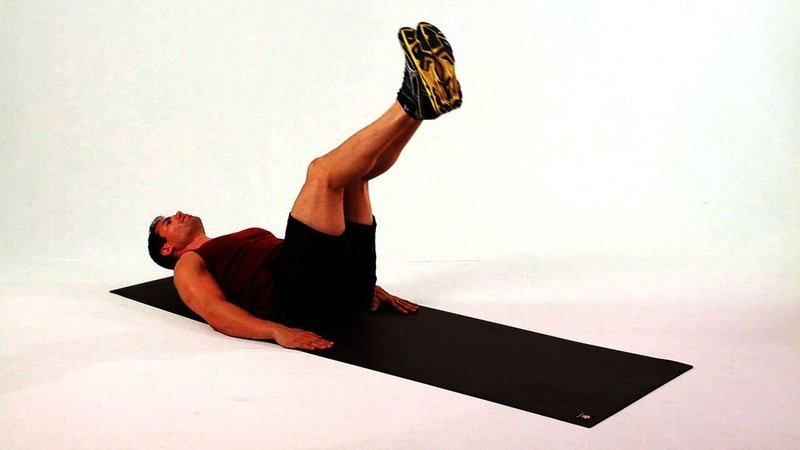
- How to Perform: Lie flat with legs fully extended. Keeping your lower back flat, raise both legs toward the ceiling. Lower them under control without letting your lower back arch.
- Recommended Volume: 2 sets of 6–10 repetitions.
- Common Mistake: Lowering the legs further than your core can safely control, straining the lumbar spine.
5. Heel Taps
Heel taps challenge lateral stability and lower abdominal endurance using minimal space and no specialized equipment.
- How to Perform: Lie on your back with knees bent and feet flat. Lift your head slightly, engage your abs, and reach your right hand to tap your right heel. Alternate to the left side.
- Recommended Volume: 2 sets of 10–12 alternating reps per side.
- Common Mistake: Moving too fast and twisting the neck instead of engaging the core.
6. Mountain Climbers
Mountain climbers combine static plank stability with dynamic knee drives, elevating your heart rate while building core endurance.
- How to Perform: Start in a high plank position. Drive your right knee toward your chest, return it, and immediately repeat with the left knee in a smooth, controlled rhythm.
- Recommended Volume: 2 sets of 20–30 seconds.
- Common Mistake: Allowing your hips to sag or bouncing your glutes high in the air.
7. Flutter Kicks
Flutter kicks require sustained isometric core tension while performing rapid, small leg movements near the floor.
- How to Perform: Lie flat with legs extended. Lift your feet a few inches off the ground and perform small, alternating upward and downward kicks while maintaining core tension.
- Recommended Volume: 2 rounds of 10–20 seconds.
- Common Mistake: Letting the lower back lift off the mat during the exercise.
8. Bird Dog
The bird dog develops posterior chain stability, balance, and cross-body core coordination from a quadruped position.
- How to Perform: Start on hands and knees. Simultaneously extend your right arm forward and left leg backward until parallel to the floor. Return and switch sides.
- Recommended Volume: 2 sets of 6–10 repetitions per side.
- Common Mistake: Rotating your hips or arching your back excessively at full extension.
9. Forearm Plank
The forearm plank is a classic isometric hold that complements dynamic lower ab moves by teaching your midsection to resist movement under fatigue.
- How to Perform: Support your body weight on your forearms and toes, keeping a straight line from head to heels. Engage your core and glutes while breathing normally.
- Recommended Volume: 2 rounds of 10–20 seconds.
- Common Mistake: Sagging at the lower back or holding your breath throughout the hold.
4. Lower Ab Exercises Comparison Table
Use this comparison chart to select the best lower ab moves for your current experience level:
| Exercise | Difficulty | Equipment Needed | Main Focus |
| Reverse Crunch | Beginner to Intermediate | Mat | Pelvic control & lower flexion |
| Dead Bug | Beginner | Mat | Anti-extension core stability |
| Bent-Knee Leg Raise | Beginner | Mat | Beginner leg leverage control |
| Lying Leg Raise | Intermediate | Mat | Advanced lower lever control |
| Heel Taps | Beginner | Mat | Lateral core control |
| Mountain Climbers | Beginner to Advanced | Mat | Dynamic plank endurance |
| Flutter Kicks | Intermediate | Mat | Sustained lower ab endurance |
| Bird Dog | Beginner | Mat | Cross-body balance & stability |
| Forearm Plank | Beginner to Advanced | Mat | Full-body isometric hold |
5. How to Create a Lower Ab Workout at Home
You do not need expensive gym equipment to perform the best lower ab moves effectively. An exercise mat and sufficient floor space are all you need to get started.
Beginner Lower Ab Workout Routine
| Exercise | Sets | Repetitions / Duration | Rest Period |
| Dead Bug | 2 | 6–8 reps per side | 45 seconds |
| Bent-Knee Leg Raise | 2 | 8–10 reps | 45 seconds |
| Bird Dog | 2 | 6–8 reps per side | 45 seconds |
| Forearm Plank | 2 | 10–20 seconds | 60 seconds |
Intermediate Lower Ab Workout Routine
| Exercise | Sets | Repetitions / Duration | Rest Period |
| Reverse Crunch | 3 | 10–12 reps | 30–45 seconds |
| Lying Leg Raise | 2 | 8–10 reps | 45 seconds |
| Mountain Climbers | 3 | 20–30 seconds | 30 seconds |
| Flutter Kicks | 2 | 15–20 seconds | 45 seconds |
| Forearm Plank | 2 | 20–30 seconds | 45 seconds |
How Often Should You Train Your Lower Abs?
Most individuals achieve optimal results by training their core 2 to 3 times per week. Abdominal muscles require adequate rest and recovery between intense workouts just like any other muscle group. For comprehensive results, pair core sessions with full-body strength work and hydration guidelines.
6. Can Lower Ab Exercises Reduce Lower Belly Fat?
A common fitness misconception is that targeting the lower abs will selectively burn fat off the lower stomach. Localized fat reduction (spot reduction) is physically impossible through targeted exercise alone.
While performing the best lower ab moves will strengthen and firm the underlying muscle tissue, visible abdominal definition depends on your overall body fat percentage. To achieve sustainable body composition changes, adopt a holistic strategy:
- Follow a Balanced Nutrition Plan: Focus on whole foods, adequate protein, vegetables, and complex carbohydrates while maintaining appropriate caloric intake. Check out our balanced nutrition guide for practical meal tips.
- Combine Resistance Training and Cardio: Compound weight lifting builds muscle, while regular cardiovascular activity aids total energy expenditure.
- Prioritize Sleep & Recovery: Aim for 7–9 hours of sleep per night to keep stress hormones balanced and support tissue repair.
Common Mistakes to Avoid During Core Workouts
- Moving Too Fast: Using momentum removes stress from the abdominal muscles and increases lumbar strain.
- Arching the Lower Back: If your lower back leaves the floor during leg raises, regress to bent-knee variations immediately.
- Holding Your Breath: Always maintain steady, continuous breathing throughout both isometric holds and dynamic movements.
- Ignoring Lumbar Pain: Sharp lower back pain is a sign of poor form or overexertion. Stop immediately and re-evaluate your technique.
Frequently Asked Questions
1. What are the best lower ab moves for beginners?
Dead bugs, bent-knee leg raises, bird dogs, and modified forearm planks are the best starting options for beginners because they build foundational core control safely.
2. Can I do lower ab moves every single day?
It is not recommended to train abs heavily every day. Abdominal muscles need 24 to 48 hours of rest between hard sessions to recover and adapt properly.
3. Will lower ab exercises burn stubborn lower belly fat?
No, lower ab exercises strengthen the underlying muscles but do not directly burn belly fat. Losing fat requires a overall caloric balance combined with full-body exercise.
4. Do I need gym equipment to do lower ab moves?
No, almost all of the best lower ab moves rely on bodyweight resistance and can be comfortably performed at home on a yoga mat.
Conclusion
Mastering the best lower ab moves involves combining controlled leg movements, pelvic tilting, and whole-core stabilization. Exercises such as reverse crunches, dead bugs, bent-knee leg raises, and planks provide safe, practical options for all fitness levels.
Focus on quality execution over quantity, progress at a manageable pace, and listen to your body. When paired with full-body strength training, cardiovascular exercise, and sound nutrition, these core movements will help you build a stronger, more resilient midsection.